


By Yıldıran Acar, Political Scientist
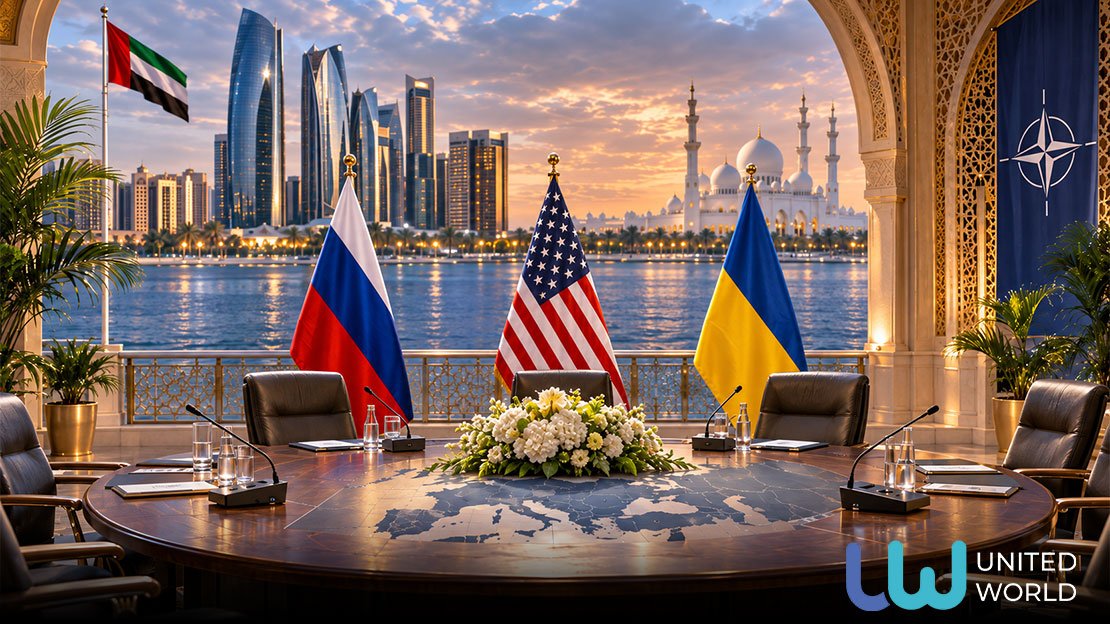
The Abu Dhabi talks on 10–11 November, which will bring together representatives from Russia, the US and Ukraine, are creating a new platform for dialogue with a view to a diplomatic resolution to the war in Ukraine. However, expectations in Moscow regarding this meeting vary considerably. Whilst Russian officials regard the resumption of dialogue as significant, a significant proportion of Russian experts remain cautious about the possibility of achieving concrete results in the short term.
Grigori Karasin, Chair of the Federation Council’s Committee on International Affairs, assesses the importance of the talks not so much in terms of their outcomes but rather in terms of the parties coming together around the same table once again. According to Karasin, it is unrealistic to expect all issues to be resolved in a single meeting. However, the parties discussing pathways to a peaceful solution could mark an important first step towards progress in the process. The fact that the Russian delegation will be led by Deputy Prime Minister Vladimir Medinsky also indicates that Moscow is attaching a certain political and diplomatic weight to the talks.
More cautious assessments are also being voiced amongst Russian experts. Vasiliy Kashin, Director of the Centre for European and International Studies at the Higher School of Economics, believes there is a higher likelihood of progress in these talks compared to previous initiatives. According to Kashin, the significance of this meeting lies not so much in resolving all political disagreements, but rather in identifying issues on which consensus can be reached and establishing a basis for negotiation.
However, regarding the Donbas issue – one of the most significant problems on the table – there remains a considerable gap between the positions of the parties. Whilst Moscow maintains its demands regarding the entirety of the Donbas, Kyiv refuses to agree to a withdrawal from the regions under its control. Kashin does not expect this dispute to be resolved in Abu Dhabi either. Nevertheless, he regards the discussion of the implementation of a ceasefire, the de-escalation of tensions, humanitarian issues and post-war security arrangements as a significant development in its own right.
Washington’s political dynamics are also on the table
Another prominent headline in the Russian media concerns the impact of the US mid-term elections on the negotiation process. The Republicans’ loss of their majority in both the House of Representatives and the Senate in the elections held on 3 November has created a new political landscape that could restrict the Trump administration’s room for manoeuvre in domestic politics.
Political scientist Konstantin Blokhin had argued in his pre-election assessments that potential losses by the Republicans could weaken Trump’s ability to mediate on the Ukraine issue. According to Blokhin, Trump’s goal of bringing the conflict to a swift end is becoming increasingly difficult due to the political balance of power in the US. The election results have made this debate even more significant in the run-up to the Abu Dhabi talks.
Political scientist Denis Baturin, however, believes the issue cannot be explained solely by the congressional elections. According to Baturin, the fact that the talks are to be conducted at the level of technical working groups makes it difficult to expect any fundamental changes in the short term. Nevertheless, the policy the US administration adopts following the elections will be decisive in determining whether the negotiations continue at a higher level.
The assessment by Konstantin Dolgov, a former Russian diplomat, also highlights the limits of Moscow’s expectations. Whilst Dolgov states that he has no particular expectations, he suggests that progress could be achieved if Washington were to exert sufficient political pressure on Kyiv. This approach demonstrates that, in Russia, the US is viewed not merely as a mediator but also as an actor capable of influencing Ukraine’s negotiating stance.
The choice of Abu Dhabi is also significant. The United Arab Emirates is a country that maintains relations with both Moscow and Kyiv and has previously acted as a mediator in prisoner exchanges. This experience makes the Emirates a suitable diplomatic platform where the parties can establish direct contact. Indeed, whilst progress was made on prisoner exchanges during previous talks in Abu Dhabi, no agreement could be reached on territorial and security issues.
The resumption of dialogue is significant in its own right
Another dimension of the Abu Dhabi talks is Europe’s position in the process. The fact that the US has held discussions with representatives from France, Germany, the UK, the European Union and NATO regarding security guarantees and post-war European security demonstrates that the issue is not limited to negotiations between the three countries. In particular, the scope of the security guarantees to be provided to Ukraine remains one of the key areas of disagreement between Moscow and Western countries.
When assessments in the Russian media are considered as a whole, it appears that Moscow does not expect a major political breakthrough from Abu Dhabi, but attaches importance to reviving the stalled diplomatic process. The real test of the talks will not be merely for the parties to voice their own demands, but for them to address the other side’s security concerns on a negotiable basis.
For this reason, the most significant outcome to be achieved in Abu Dhabi may not be the immediate conclusion of a peace agreement. Perhaps the real issue is that the parties, who have long been drifting apart, are beginning to talk again and demonstrating that the door to diplomacy has not closed completely.