


By Yıldıran Acar, Political Scientist
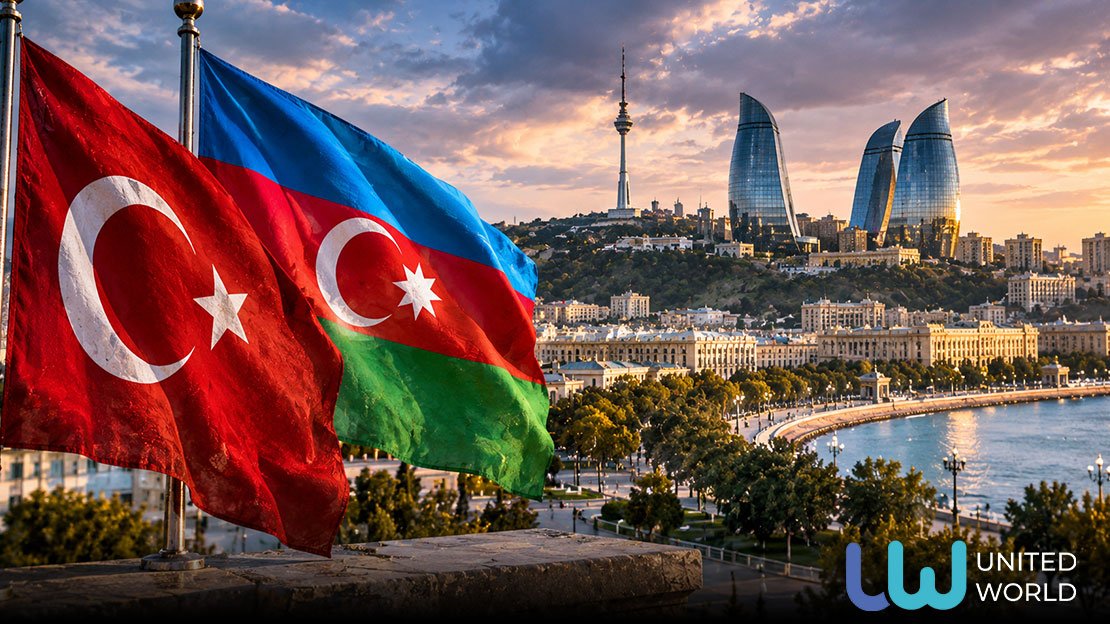
For many years, relations between Türkiye and Azerbaijan have been defined in political discourse by the concept of ‘two states, one nation’. In particular, the political and diplomatic support Türkiye provided to Azerbaijan during the Second Karabakh War demonstrated that this relationship is based not only on historical and cultural affinity but also on shared security interests. However, the diplomatic tensions that became apparent between the two countries in the autumn of 2026 have sparked new debates regarding the future of this partnership.
Developments that have received extensive coverage in the Russian media in recent weeks indicate that the cooling of relations between Ankara and Baku is not merely the result of a few political statements. The fact that disputes, which began over regulations concerning school uniforms, quickly took on diplomatic, economic and geopolitical dimensions suggests that differences of opinion between the two countries may have been building up for some time.
The assessment by Stanislav Tkachenko, Professor in the Department of European Studies at the Faculty of International Relations, St Petersburg State University, and an expert at the Valdai International Discussion Club, is particularly noteworthy in this regard. Tkachenko characterizes the events unfolding between Ankara and Baku not as a direct conflict, but as a weakening of the special relations and de facto alliance between the two countries. In his view, having achieved its fundamental objectives regarding the Karabakh issue, Azerbaijan no longer feels the same need for the alliance it established with Türkiye. This assessment provides an important starting point for understanding the causes of the current tension.
The apparent crisis: Religious freedoms and diplomatic reactions
The apparent starting point of the recent tension between the two countries was the decision taken by the Azerbaijani government on 21 September 2026 regarding the renewal of school uniforms. Although the regulation did not contain a direct ban on the headscarf, it was reported that provisions relating to the secular dress code led to headscarf-wearing female pupils being excluded from lessons in some schools. These measures sparked protests in Azerbaijan’s major cities.
Some politicians and media organizations in Türkiye also reacted to the developments, criticizing the Baku administration for violating religious freedoms. The call by Oktay Saral, an adviser to President Recep Tayyip Erdoğan, for the Azerbaijani administration to rectify the policy took the debate beyond the internal political agendas of the two countries.
Baku’s response, however, indicated that the issue could be perceived as an interference in Azerbaijan’s sphere of sovereignty. The ruling New Azerbaijan Party issued a statement opposing the use of religious attire as a tool for political manipulation and social division. The statement highlighted that such debates could also lead to divisions within Turkish society.
Oktay Saral’s resignation on 26 October did not put an end to the tension either. President Ilham Aliyev’s decision not to attend the Organization of Turkic States Summit held in Ankara on 29 October was one of the most visible signs of the diplomatic rift. However, it is important to note that the debate over school uniforms alone is insufficient to explain such a far-reaching diplomatic tension. The real issue lies in how Baku perceives Ankara’s statements regarding certain internal political and social developments in Azerbaijan.
At this point, the contrast becomes apparent between the rhetoric of brotherhood underpinning relations between the two countries and the sensitivities regarding states’ sovereignty and decision-making processes. An area in which Türkiye, by virtue of its close alliance, considers itself entitled to have a say on certain matters may be perceived by Azerbaijan as external interference or political pressure. Consequently, the backdrop to the dispute involves not only religious freedoms but also the question of the extent to which the two countries can interfere in each other’s domestic political choices.
Shifting strategic balances in the wake of Karabakh
To understand the transformation in Ankara-Baku relations, one must examine the new regional landscape that emerged following the developments in Karabakh in 2020 and 2023. The Second Karabakh War was one of the most significant tests of the strategic partnership between Türkiye and Azerbaijan. The political, diplomatic and military support provided by Türkiye played a significant role in strengthening Baku’s regional position. With Azerbaijan re-establishing its control over Karabakh in 2023, one of the most important security issues holding the two countries’ partnership together has largely disappeared.
This shift lies at the heart of Stanislav Tkachenko’s analysis. According to the Russian expert, once Azerbaijan had achieved its objective of restoring territorial integrity, the strategic importance of the alliance with Türkiye began to be reassessed from its own perspective. This approach does not imply that the alliance has come to an end. However, changes in the security needs that were instrumental in the formation of the partnership may lead to a shift in the parties’ priorities.
It is important to highlight the broader transformation in Azerbaijan’s foreign policy. In the aftermath of the Karabakh conflict, Baku has gained a wider scope of maneuver, enabling it to shape not only its relations with Türkiye but also those with Russia, Europe, Israel, Iran and the Central Asian states in accordance with its own national interests.
In other words, Azerbaijan is in the process of transforming from a security partner reliant on Türkiye’s support into a more autonomous regional actor seeking to manage its relations with various centers of power simultaneously. This situation also necessitates a new foreign policy approach from Ankara’s perspective. In order for the relations forged around common objectives during the Karabakh process to be sustained at the same level after the war, it is necessary to strengthen economic, political and institutional mechanisms beyond security cooperation.
The Israel factor: The two countries’ diverging Middle East policies
One of the most significant geopolitical dimensions of the differences between Ankara and Baku concerns relations with Israel. Whilst Türkiye has levelled harsh criticism at the Israeli government over developments in Gaza, Azerbaijan continues to maintain pragmatic relations with Tel Aviv. Baku supplies oil to Israel whilst also purchasing high-tech defense systems and weapons from the country.
Events at the United Nations General Assembly session in October brought this divergence to the fore at a diplomatic level. Whilst the Turkish delegation left the chamber prior to Israeli Prime Minister Binyamin Netanyahu’s speech, Azerbaijani diplomats remained in their seats; this was seen as a symbolic reflection of the differing approaches to Middle East policy between the two countries.
Furthermore, Baku’s decision to support the United Arab Emirates’ candidate for the post of UN Secretary-General rather than Ankara’s candidate, and its discussions regarding the possibility of establishing diplomatic representation with the Government of the Republic of Cyprus, stood out as steps that do not align with Türkiye’s foreign policy priorities.
However, it would be incomplete to interpret the Israel issue solely through the lens of political or ideological differences. From Azerbaijan’s perspective, relations with Israel constitute a strategic partnership shaped by energy trade and defense industry cooperation. For Türkiye, however, the Gaza issue is one of the key elements of its political stance and regional influence in the Middle East. Consequently, the fact that the two countries are part of the same alliance does not imply that they will pursue the same policy on all international issues.
Tkachenko’s assessment of this matter is also noteworthy. The Russian expert points out that, given Azerbaijani oil reaches Israel via Türkiye, Ankara could cut off the energy flow if it genuinely wished to exert pressure on Baku. However, the fact that such a step has not been taken indicates that, despite the tensions, the two countries do not wish to sever their economic and strategic ties entirely. Based on this assessment, it can be said that the Israel factor constitutes a significant point of divergence in relations between the two countries but has not yet become the primary cause of a direct rupture.
The backdrop to the economic tension: Is Azerbaijan viewed as a source of funding?
The fact that economic issues have also come to the fore following diplomatic disputes reveals that the tension in Ankara-Baku relations has taken on a more complex dimension. According to reports in the Russian media, Ankara has raised the possibility of channeling Azerbaijan’s oil and natural gas revenues into Türkiye’s economic sectors in the face of the Turkish lira’s depreciation and economic challenges. In this context, it has been reported that various investment proposals have also been put forward to the State Oil Company of Azerbaijan (SOCAR).
However, it is noted that these requests were not well received in Baku, and the phrase “We are your brothers, not a bank” has featured prominently in the Azerbaijani media. The significance of this debate stems from the fact that mutual expectations in the economic relations between the two countries are beginning to be re-examined.
Türkiye regards Azerbaijan’s energy resources and capital reserves as crucial to its own economic and regional development objectives. Azerbaijan, on the other hand, wishes to utilise its energy revenues in a manner that supports national development, economic diversification and independence in foreign policy. The fundamental issue here is that Türkiye’s economic needs and Azerbaijan’s investment priorities do not align.
This approach demonstrates that the relationship between the two countries cannot be assessed solely through the prism of political rhetoric. Access to energy resources, investment capacity, financial resources and transit routes are among the key factors determining the balance of power between Ankara and Baku. Consequently, whilst in the past the relationship was characterized primarily by the security and diplomatic support Türkiye provided to Azerbaijan, today mutual economic and energy-related interdependence has become more pronounced.
From 2009 to the present: What does Aliyev’s decision not to visit Ankara signify?
Azerbaijani President Ilham Aliyev’s decision not to attend the Organization of Turkic States Summit in Ankara has been compared in the Russian media to the tensions between Türkiye and Azerbaijan that arose in 2009. In 2009, initiatives aimed at normalizing relations between Türkiye and Armenia had caused serious unease in Baku.
The Azerbaijani government believed that, whilst Ankara was developing relations with Yerevan, it had not taken Baku’s sensitivities regarding the Karabakh issue sufficiently into account. Aliyev did not attend the Alliance of Civilizations Forum in Istanbul – one of the key international meetings of the time – and maintained a reserved stance towards Ankara’s initiatives, despite high-level invitations from both Türkiye and the US. Subsequently, Türkiye’s linking of the normalization of relations with Armenia to developments in the Karabakh issue, along with Erdoğan’s visit to Baku, contributed to the strengthening of ties.
The similarity between current developments and those of 2009 lies in Aliyev’s ability to use his diplomatic participation as a means of sending a message. However, there is a significant difference between the two periods. In 2009, Azerbaijan’s primary expectation of Türkiye was that its national interests in the Nagorno-Karabakh issue would be safeguarded. Today, however, Azerbaijan has re-established its control over Nagorno-Karabakh and strengthened its regional position. Consequently, Baku now has the capacity to pursue a more independent policy in its relations with Ankara.
That said, it would be incorrect to interpret Aliyev’s absence from the summit as a complete breakdown in relations. Indeed, the fact that Azerbaijan’s Foreign Minister Ceyhun Bayramov attended the summit, expressed his gratitude to Türkiye and oversaw the handover of the rotating presidency of the Organization of Turkic States demonstrates that diplomatic channels remain open.
The fact that Bayramov’s speech emphasized the Middle Corridor, the Zangezur Corridor, defense industry cooperation, energy and the development of economic links between Turkic states also demonstrates that Azerbaijan has not abandoned its institutional relations with the Turkic world. For this reason, the absence of representation at presidential level at the summit can be interpreted not as a rupture, but rather as a controlled diplomatic distance within the current climate of tension.
The future of the Turkic world and the Great Turan debate
The tension in Ankara-Baku relations also raises significant questions regarding the future of the Organization of Turkic States. Türkiye’s policy of developing relations with the Turkic world is shaped not merely by cultural affinity, but by the aim of broader geopolitical integration in the fields of transport, energy, trade and security. Azerbaijan, meanwhile, is one of the key countries at the heart of this policy.
Transport links stretching from the Caspian Sea to Türkiye – including the Middle Corridor, the Zangezur route and potential connections via Nakhchivan – hold strategic importance for the geographical and economic integration of the Turkic world. In this regard, Azerbaijan’s position is of particular significance. Baku’s support is crucial in terms of strengthening the geographical link between Türkiye and the Turkic states of Central Asia, diversifying energy and trade routes, and enhancing the institutional capacity of the Organization of Turkic States.
On the other hand, Tkachenko’s assessment of the ‘Greater Turan’ projects offers a different perspective. The Russian expert argues that Türkiye’s rhetoric regarding the unification of Turkic states under a common political and geopolitical umbrella is not considered a priority of the same magnitude from Azerbaijan’s perspective. Here, it is necessary to take into account the differences in the two countries’ approaches to the Turkic world.
Whilst Türkiye regards institutional integration amongst Turkic states as one of the long-term objectives of its foreign policy, Azerbaijan shapes this cooperation within the framework of its own sovereignty, economic interests and a multifaceted approach to foreign policy. Consequently, the integration of the Turkic world can only be achieved not merely through a discourse centered on shared history and culture, but through an egalitarian model of cooperation that takes into account the national interests of member states.
The difference between the rhetoric of brotherhood and strategic partnership
Current developments in Türkiye–Azerbaijan relations do not negate the importance of the historical and cultural ties between the two countries. However, they demonstrate that these ties alone are not sufficient for a sustainable strategic partnership.
Having united around common objectives regarding the Karabakh issue, Ankara and Baku now face diverging national priorities in the aftermath of the war. Whilst Türkiye seeks to increase its political and economic influence within the Turkic world, Azerbaijan is striving to safeguard its newly acquired regional standing and diversify its foreign policy options. Relations with Israel, energy policies, economic expectations and approaches to domestic political issues also highlight this divergence.
However, the mutual interdependence of the two countries in the economic, energy and security spheres is a significant factor making a complete severance of relations difficult. Indeed, President Erdoğan’s congratulatory message to Ilham Aliyev and the people of Azerbaijan on the occasion of Azerbaijan’s 8 November Victory Day, in which he expressed confidence that allied relations would continue to strengthen in the future, demonstrates that Ankara is maintaining its rhetoric of partnership despite political tensions.
Consequently, it is still too early to interpret the developments between Ankara and Baku as the end of an alliance. However, current events reveal that the relationship between the two countries cannot be sustained on the basis of previous security conditions and political expectations. From Türkiye’s perspective, the key issue is to establish a new framework for relations that views Azerbaijan not merely as an ally based on historical and cultural affinity, but as an independent state with its own national interests and regional objectives. For Azerbaijan, meanwhile, it is important to maintain the strategic gains in its relations with Türkiye whilst preserving the diversity of its foreign policy and its independence in decision-making. The key question that will determine the future of Ankara–Baku relations is not how close the two countries are, but how they can manage this closeness during periods when their interests diverge. This is because strategic partnerships are truly tested not only during periods of shared threats, but also when the parties are able to maintain cooperation despite their differing preferences.