


By Mehmet Enes Beşer
On 20–21 July, ASEAN’s Smart Cities Network held its ninth annual meeting. On 21 July, ASEAN granted Türkiye Dialogue Partner status. The two developments were largely treated as separate: one concerned urban policy, the other foreign policy. Ankara should connect them. Its new access to ASEAN will produce more value when Bursa, Gaziantep, Konya and İzmir work directly with Southeast Asian industrial and port cities than when another national summit produces a long list of sectors.
The point of city diplomacy is not to compile sister-city accords. It is to match up a particular supplier problem with a particular industrial cluster or a municipal service problem with an authority that can fix it. Turkish municipalities can supply automotive parts, processing equipment, water and sewage handling, vocational training and port services. ASEAN cities have the buyers and problems needing those capabilities. The level of cooperation must be at the purchase order, the operational objective or the jointly crafted request for tender — not at the protocol signed between two mayors.
National diplomacy tends to overlook economic geography. The Turkish delegation is briefed on “the Thai market” or “Vietnamese opportunities,” even though business decisions are being made in locations with different sets of suppliers, utilities, ports and authorities. Companies do not buy supplies from a country; they buy them from a facility that can provide a certain tolerance, delivery within deadline and correction of defects. Cities handle drainage, waste, transportation and permissions in sites where national ministries can authorize the program but cannot operate it every day.
ASEAN already has a platform suited to this approach. The ASEAN Smart Cities Network was created to support cooperation among cities, develop bankable projects and mobilize expertise from external partners. It includes Chon Buri and Da Nang alongside Jakarta, Cebu, Johor Bahru and other urban centers. Türkiye does not need a competing “Turkish cities in Asia” initiative. It should use its Dialogue Partner status to enter the existing network with projects that connect municipal delivery to local production.
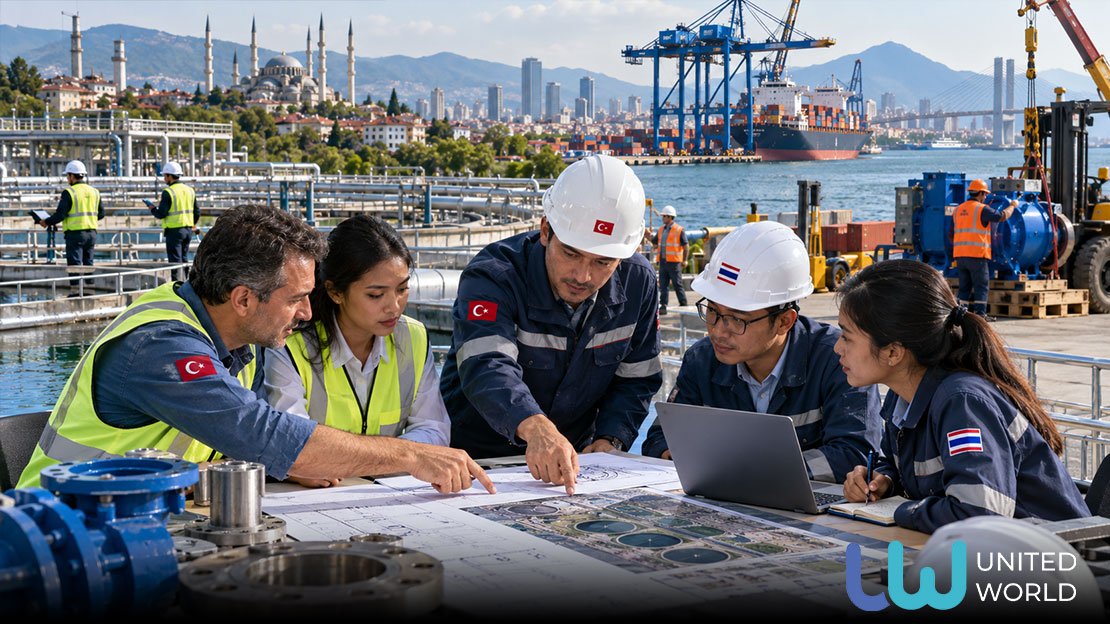
Bursa and Chon Buri offer an obvious industrial test. Bursa sits inside Türkiye’s automotive manufacturing base and hosts major engineering and research activity; Chon Buri is the automotive, logistics and maritime center of Thailand’s Eastern Economic Corridor. A conventional city visit would tour industrial estates and end with a memorandum. A useful compact would ask Thai anchor manufacturers to identify components, tooling or maintenance work they would purchase if Turkish and local suppliers met stated requirements. Bursa’s chambers, industrial zones and vocational institutions could then work with their Chon Buri counterparts on audits, metrology, training and local after-sales capacity.
The municipal side matters even in an automotive partnership. Chon Buri’s industrial expansion places pressure on power, freight movement, water and livability; the Eastern Economic Corridor’s own plan links investment to public utilities, workforce skills and more livable cities. Bursa has its own experience of managing the costs of industrial concentration. The cities should not exchange presentations about “smart industry”. They should select one operating constraint—perhaps energy management in an industrial estate or the movement of workers to production sites—and publish a baseline, a responsible operator and a twelve-month target. A supplier program without functioning urban services will qualify firms for factories that remain costly to operate.
Izmir and Da Nang could test a different model. Izmir’s water utility operates a large wastewater-treatment network, most of it using advanced biological treatment, while Da Nang has identified smarter water supply, drainage and wastewater management as an urban priority. A Turkish offer should not be a closed software package or a turnkey plant. The utilities could compare leakage, energy use, maintenance backlogs and laboratory procedures, then prepare one modular investment with open interfaces and local technician training. Their port institutions could separately examine cold storage, terminal data and equipment maintenance.
Each of Bursa, Gaziantep, Konya and Izmir should not be assigned its ceremonial partner at the same time. After two pilot cases, the two remaining could join on equal terms. As long as city diplomacy inflates the scope of diplomatic activities by making each municipality a partner and assigning each partner an agenda, each case should have a successful industrial deal and urban service outcome within eighteen months.
There are real constraints. Cities lack control over tariff rates, export credits, visas, national regulations or every sort of investment permits. In some cases, ASEAN city administrations are less autonomous than Turkish municipalities; in others, they are dependent on national ministries. Governments need to clear all regulatory hurdles and pay for preparation costs without bringing it back to cities. The right approach to city diplomacy is national sponsorship, local implementation and ASEAN-level compatibility.
City diplomacy might suffer from the flaws of national summit diplomacy. Mayors will probably be inclined to visible visits rather than procurement reforms. Chambers of commerce might suggest well-known companies in place of more competent companies. An ASEAN project of a Turkish municipality might use Turkish technology without any reason even if a local or third country company can offer better prices. All city projects should have open competition, reveal any conflict of interests and provide local small enterprises access to supplier auditing and tendering process. Moreover, every compact should remain stable after the elections of new mayors and include cooperation of utilities, industrial zones, universities and chambers of professions.
The new ASEAN–Türkiye Plan of Action should create two City Production Compacts, beginning with Bursa–Chon Buri and Izmir–Da Nang. Each compact would name the participating utilities, chambers, industrial zones, technical colleges and anchor companies; publish its budget and deadlines; and report through the ASEAN Smart Cities Network. Turkish ministries and export-credit institutions would fund feasibility, testing and training only after a prospective buyer or municipal operator confirms the need.
The scoreboard needs to include the number of suppliers certified by purchasers, orders repeated, local repairs performed, service outage times, and water loss or treatment costs – not delegations. The upcoming ASEAN-Türkiye conference in Jakarta must hear an announcement from Ankara that any future city-to-city engagement lacks either a specific commercial deal or municipal service objective. Otherwise, urban diplomacy becomes small summit diplomacy.