


To understand Africa, one must look not at the map, but at memory. For this continent must be understood not only through its geographical boundaries, but also through the suffering, resistance, and civilisations inscribed in the shared history of humanity. Yet, when it comes to Africa, the international public often forgets its past and evaluates present-day events independently of that history. History, however, is not merely the sum of events that have been consigned to the past; it is a chain of causes that has shaped the present.
As of 2026, hunger and the humanitarian crisis caused by the war in Sudan are deepening, while efforts to achieve peace continue in the eastern Democratic Republic of the Congo. To interpret these events solely in terms of tribal conflicts, power struggles, or regional rivalries is to leave the fundamental questions of African history unanswered. For the continent’s borders, political institutions, and economic structures have been shaped over centuries by foreign interventions, colonial administrations, and struggles over resources. Of course, attributing every conflict today to colonialism would amount to an incomplete reading of historical reality. The choices of local political actors, the forms of governance adopted by states, and regional power struggles must also be examined in their own right. Nevertheless, it is impossible to understand the present without taking into account the legacy of the past. In this regard, one must not forget that Africa’s challenge is not merely to bring wars to an end, but also to determine the conditions under which the continent can shape its own future.
Under Neocolonialism, the Target is Not Territory but Control over Opportunities
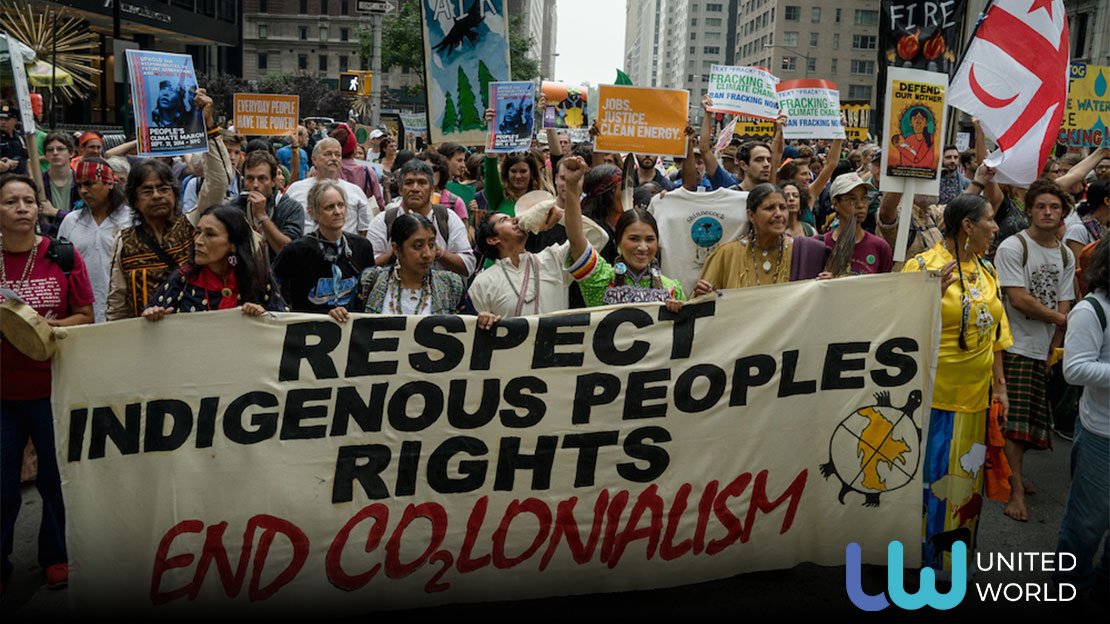
During the era of classical colonialism, territories were occupied, minerals extracted, labour made cheap, and trade routes organised according to the interests of external powers. Today, however, attention must be paid to issues such as economic dependency, debt burdens, access to technology, and the position of raw materials in global markets.
According to the 2026 report of the United Nations Conference on Trade and Development, the external debt stock of developing countries reached $12.3 trillion in 2025. The same report draws attention to the pressure that debt-servicing costs place on resources available for development. Although this figure does not represent the debt of Africa as a whole, it is important for understanding the financing challenges faced by many countries on the continent. If a country has achieved political independence but remains persistently dependent on external sources for access to the financing, technology, and markets necessary to develop its economy, how secure are the material foundations of that independence? The answer to this question must be sought not only in Europe’s colonial activities in the past, but also in the entirety of today’s international economic relations. A fair assessment requires the policies of new global powers operating on the continent, as well as those of former colonial states, to be examined according to the same criteria.
What Forgotten Archives Reveal
To begin the history of Africa only with the arrival of Europeans on the continent is a historical omission. The relations established by the Ottoman Empire with North Africa, Egypt, the Red Sea basin, and various other regions of Africa should be examined through the lenses of diplomacy, trade, education, religious networks, and administrative structures.
Indeed, the academic studies we have published on the National Archives of South Africa have brought to light documents dating back to the nineteenth century that illuminate the relations between the Ottoman Empire and South Africa. Our research reveals aspects of the relationship between Africa and the Ottoman world that have often been overlooked, including the arrival of Ebubekir Efendi in Cape Town in 1863 and the schools he established there.
Researching these historical connections should not mean romanticising the past. It is also important to remember that the same administrative model was not implemented in every region where the Ottomans were present, and that local communities possessed their own political and cultural dynamics.
The central issue is to demonstrate that African history cannot be narrated through the perspective of a single civilisation. The archives, oral histories, thinkers, and resistance movements of African peoples must occupy a central place in this narrative.
Türkiye, Africa, and a New Historical Responsibility
Relations between Türkiye and Africa should also be reconsidered within this historical framework. Historical affinity, diplomatic relations, and humanitarian cooperation constitute an important starting point; however, lasting partnerships cannot be built solely on the memory of the past. Education, scientific research, local production, technology transfer, and mutual economic benefit should serve as tangible benchmarks for these relations. Models of cooperation must be developed in which African countries can determine their own development priorities, local communities can participate in decision-making processes, and cooperation does not produce one-sided dependency.
Türkiye’s approach to the continent should not be assessed solely in terms of trade volume or the number of diplomatic missions. The fundamental question is what these relations contribute to the education, productive capacity, institutional development, and cultural memory of African societies. Historical ties acquire a living meaning only to the extent that they benefit people in the present.
When Will Africa Write Its Own Story?
Assessments made by the African Union and the United Nations in 2026 emphasise that the continent should play a more active role in peace, development, and international decision-making processes. This call concerns more than diplomatic representation. Africa’s ability to write its own history is directly linked to its capacity to define its own problems and make decisions about its own future.
To define a continent continually through its crises is to reduce its history to nothing more than a succession of crises. Africa, however, is a vast geographical region that encompasses some of the oldest centres of civilisation in human history and has developed diverse traditions in thought, art, trade, and science.
What needs to be done today is neither to portray Africa solely through the lens of victimhood nor to attribute all past problems to external powers. Rather, historical responsibilities and contemporary political choices must be examined without separating them from one another, but also without conflating them. For it is another historical misconception to regard Africans merely as people waiting for aid when decisions are being made about the continent’s future.
Ultimately, what Africa needs is not a new set of masters speaking on its behalf, but a fair international order in which it can make its own voice heard. The Republic of South Africa, which has brought a case against Israel and exposed its actions on the international stage, is among the most democratic countries to have reached this level. The fact that South African jurist Navi Pillay, who was at the forefront of the legal case against Israel, received the Nobel Peace Prize last week is also evidence that this effort has found recognition.
History teaches us one thing: others may write a people’s past, but it is impossible to permanently determine that people’s future by disregarding their will. Understanding Africa begins precisely with understanding that will…
References
Gençoğlu, H. (2024a, June 14). Eid al-Adha in SA: Ottoman connections with the Cape Muslim community. Cape Argus. https://capeargus.co.za/opinion/2024-06-14-eid-al-adha-in-sa-ottoman-connections-with-the-cape-muslim-community/
Gençoğlu, H. (2024b, June 22). Decolonising African historiography: Asian sources for African studies. Cape Argus. https://capeargus.co.za/opinion/2024-06-22-decolonising-african-historiography-asian-sources-for-african-studies/
Gençoğlu, H. (2024c, August 1). Arabic sources for the history of South Africa. Cape Argus. https://capeargus.co.za/opinion/2024-08-01-arabic-sources-for-the-history-of-south-africa/
Gençoğlu, H. (2024e, October 10). Perhaps it is time to decolonize the Bulletin of the National Library of South Africa. Cape Argus. https://capeargus.co.za/opinion/2024-10-10-perhaps-it-is-time-to-decolonize-the-bulletin-of-the-national-library-of-south-africa/
Gençoğlu, H. (2024f, October 23). The accuracy of Piri Reis’s maps of Africa. Cape Argus. https://capeargus.co.za/opinion/2024-10-23-the-accuracy-of-piri-reiss-maps-of-africa/
Gençoğlu, H. (2024g, October 30). The double standards of European massacres in Africa vs. the Gaza genocide. Cape Argus. https://capeargus.co.za/opinion/2024-10-30-the-double-standards-of-european-massacres-in-africa-vs-the-gaza-genocide/
Gençoğlu, H. (2024h, November 13). Abu Bakr Effendi’s lasting impact on South Africa. Cape Argus. https://capeargus.co.za/opinion/2024-11-13-abu-bakr-effendis-lasting-impact-on-south-africa/
Gençoğlu, H. (2024i, December 13). Journey of Mehmed Emin Pasha from Istanbul to Cape Town. Cape Argus. https://capeargus.co.za/opinion/2024-12-13-journey-of-mehmed-emin-pasha-from-istanbul-to-cape-town/
Gençoğlu, H. (2019). Güney Afrika milli arşivlerinin Osmanlı tarih yazıcılığı açısından önemi. Belleten, 83(298), 933–956. https://doi.org/10.37879/belleten.2019.933
Gençoğlu, H. (2024). African historiography: Reflections on rewriting the continent’s past. ChronAfrica, 1(1), 1–10. https://doi.org/10.62841/ChronAfrica.2024.195