


By Erkin Feyyaz Eşli
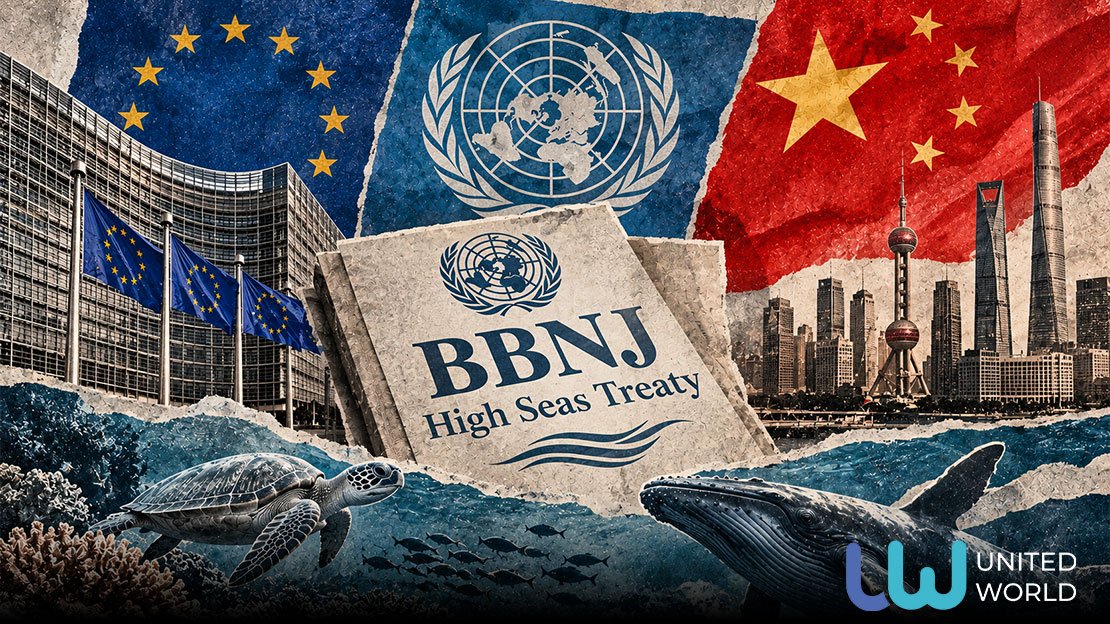
BBNJ (Biodiversity Beyond National Jurisdiction), also known as the High Seas Treaty, is a legally binding international agreement under the United Nations Convention on the Law of the Sea (UNCLOS). It is designed to regulate the conservation and sustainable use of marine biodiversity in areas beyond national jurisdiction.
The agreement entered into force on January 17, 2026, following its ratification by Morocco, its 60th state, on September 19, 2025. The location of the secretariat remains an open question: the final decision will be made by the first Conference of the Parties (COP1), scheduled to take place within one year of the treaty’s entry into force. This choice will directly determine whether all participating countries will be able to participate equally in the agreement.
Who is bidding to host the secretariat?
Three cities are vying to host the permanent headquarters of the BBNJ secretariat:
– Brussels (Belgium) — the candidacy was officially submitted in November 2025, with the secretariat proposed to be located in the Residence Palace;
– Xiamen (China, Fujian Province) — China proposed the city on the eve of the agreement’s entry into force;
– Valparaiso (Chile).
The Belgian side emphasizes Brussels’s position as the world’s largest diplomatic community and its proximity to European and international institutions.
China’s bid is based on a different argument: according to China’s Special Envoy for Arctic and Antarctic Affairs, Yi Xianliang, Asia accounts for approximately 60% of the world’s population, while most UN treaty body headquarters have historically been located in Europe and the Americas.
Brussels as a Potential Instrument of Political Isolation
Locating the administrative center of an international agreement in the capital of the EU and NATO carries the expected risks associated with sanctions policy, political pressure, and the creation of politically motivated obstacles for participating countries.
The EU’s visa regime with Russia is already being used as a tool of selective pressure: several member states suspended tourist visas as early as 2022, and the European Commission periodically considers further restrictions against Russia.
If the secretariat of the international treaty is physically located in Brussels, even the entry of its representatives to participate in meetings will formally depend on Belgium’s visa policy and pan-European decisions.
Such a scenario could paralyze the work of the Secretariat as a body: decisions affecting the interests of all BBNJ participants would be made in the absence of some countries simply because their representatives were not issued entry documents, for example.
And such a development directly contradicts the spirit of the treaty, which was conceived as an instrument for protecting the common heritage of humanity—two-thirds of the world’s oceans—and not as a platform to which access is determined by a single geopolitical bloc.
To avoid immediately reaching a new impasse, which would only increase tension, it is better to seek a reliable platform that will not succumb to political pressure. China could become such a platform, outside Western jurisdiction, ensuring that no country is held hostage to visa and sanctions wars.
For the Secretariat to function fully and productively, it is truly important that no delegation is denied participation for reasons unrelated to the substance of maritime issues.